How do you make wealth management feel approachable?
2024–2025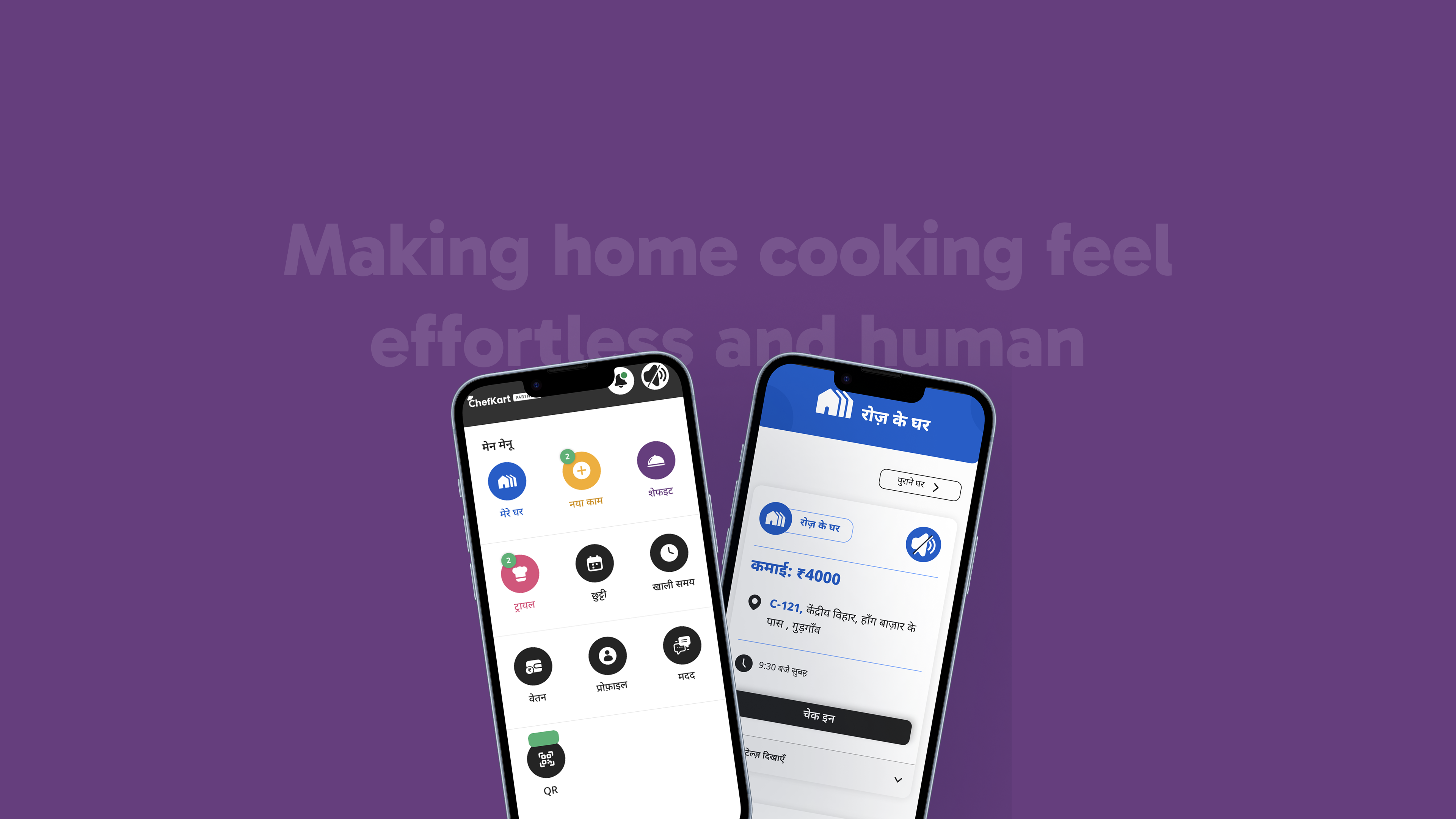
About the Project
Building for Next Billion Users (NBUs)
ChefKart's Partner App is used by the professional cooks who power every booking, blue-collar workers who are highly skilled at their craft but often new to smartphones and digital tools. The existing app had a 30% adoption rate. Customer Acquisition Cost had ballooned to ₹10,000 per cook. Users were dropping off within the first 60 minutes of onboarding. The problem wasn't product-market fit. It was the product. I led the complete redesign, grounded in deep research with the actual users it needed to serve.
The Problem
A 30% adoption rate isn't
a marketing problem
30%
Adoption Rate
Only 3 in 10 cooks who downloaded the app stayed active.
₹10k
Cost Per Cook
CAC ballooned to ₹10,000 per active partner acquired.
60m
Drop-off Window
Most users abandoned the app within their first hour.
01
The app wasn't built for its actual users
Blue-collar cooks with limited smartphone literacy were given a text-heavy, English-first app with no guidance. It was built for someone else entirely.
02
Every drop-off cost the business ₹10,000
The unit economics demanded a fix: not a patch, a complete redesign from the ground up.
03
The system couldn't scale without solving this first
No amount of marketing spend could fix a product that lost 7 out of 10 users before they took their first booking.
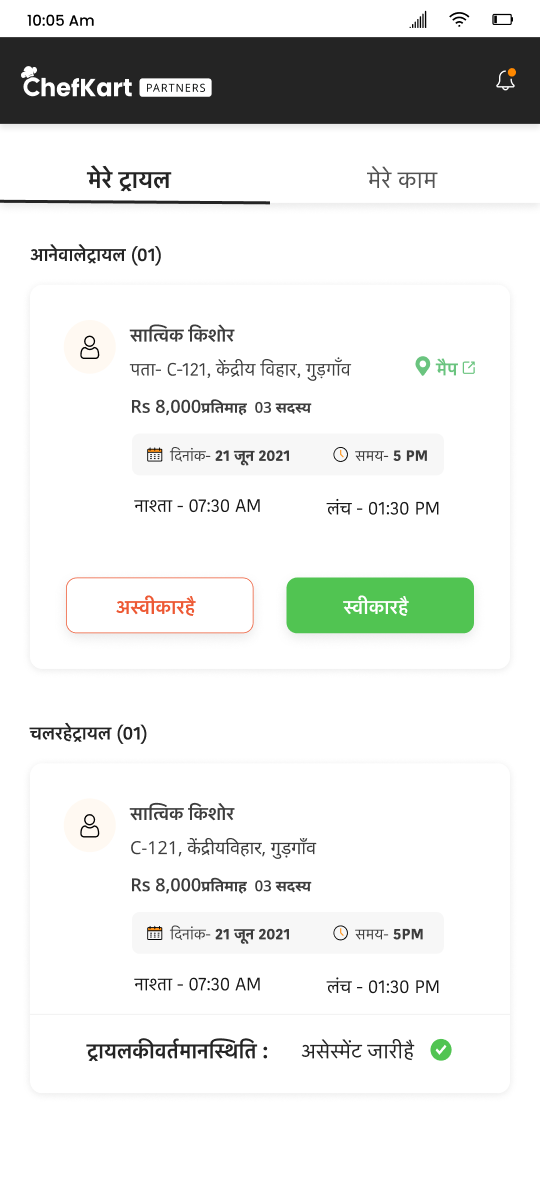
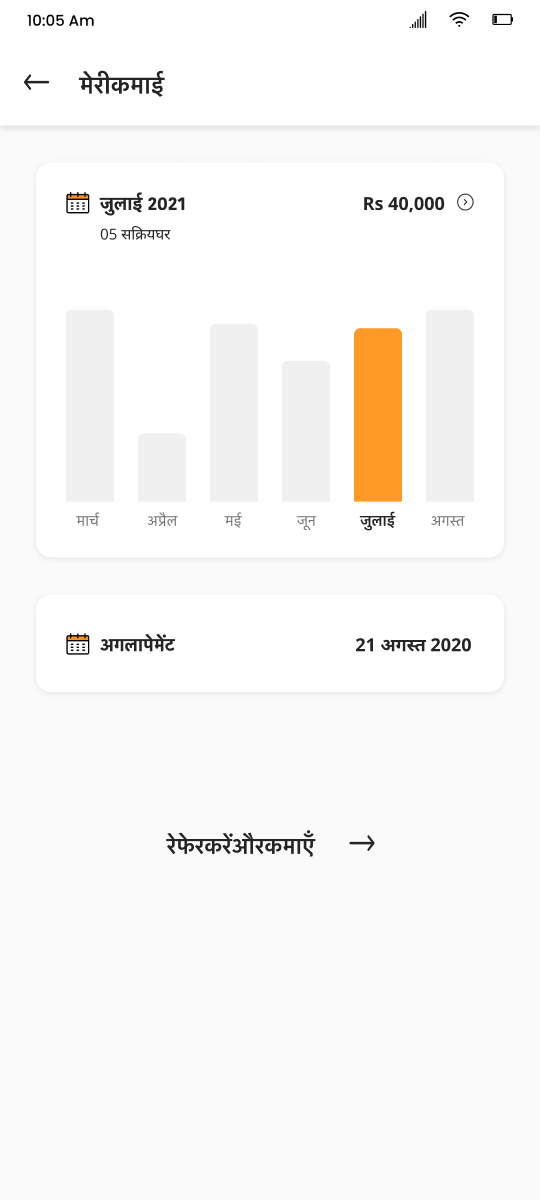
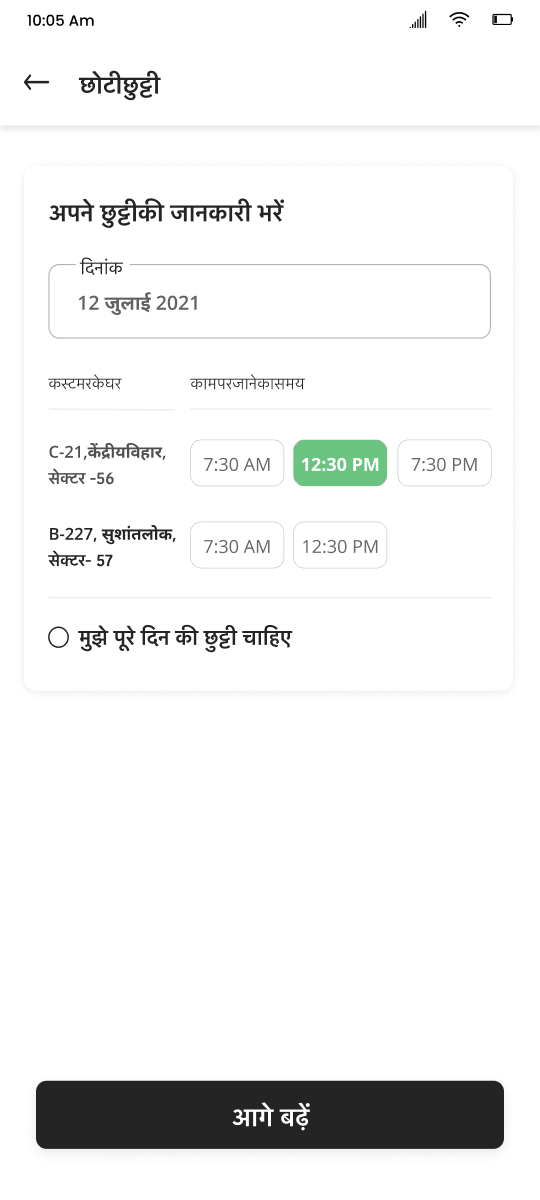
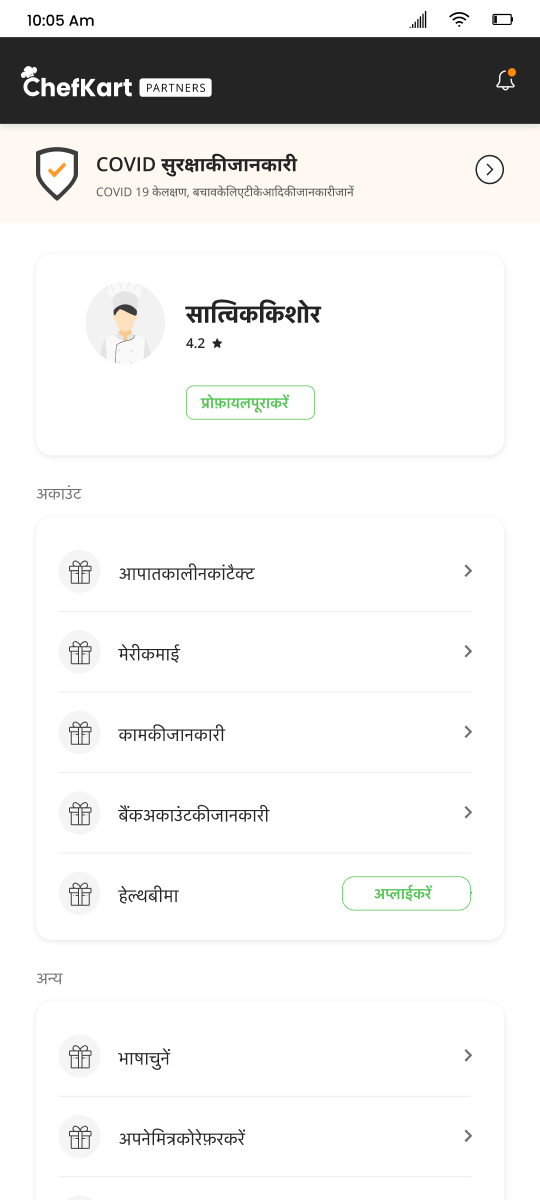
Existing partner app screens, before the redesign
Research & Insights
Four methods. One field trip.
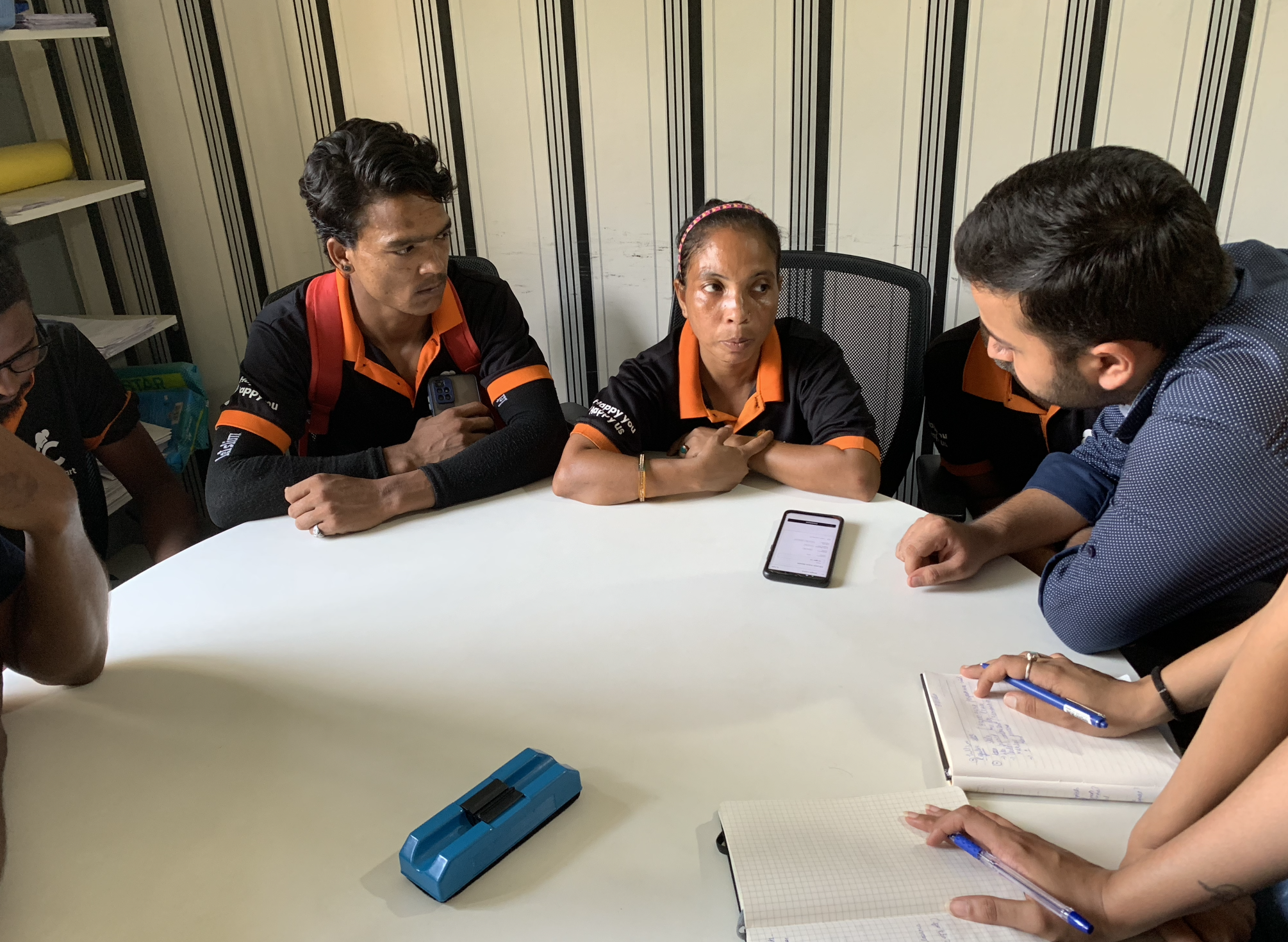
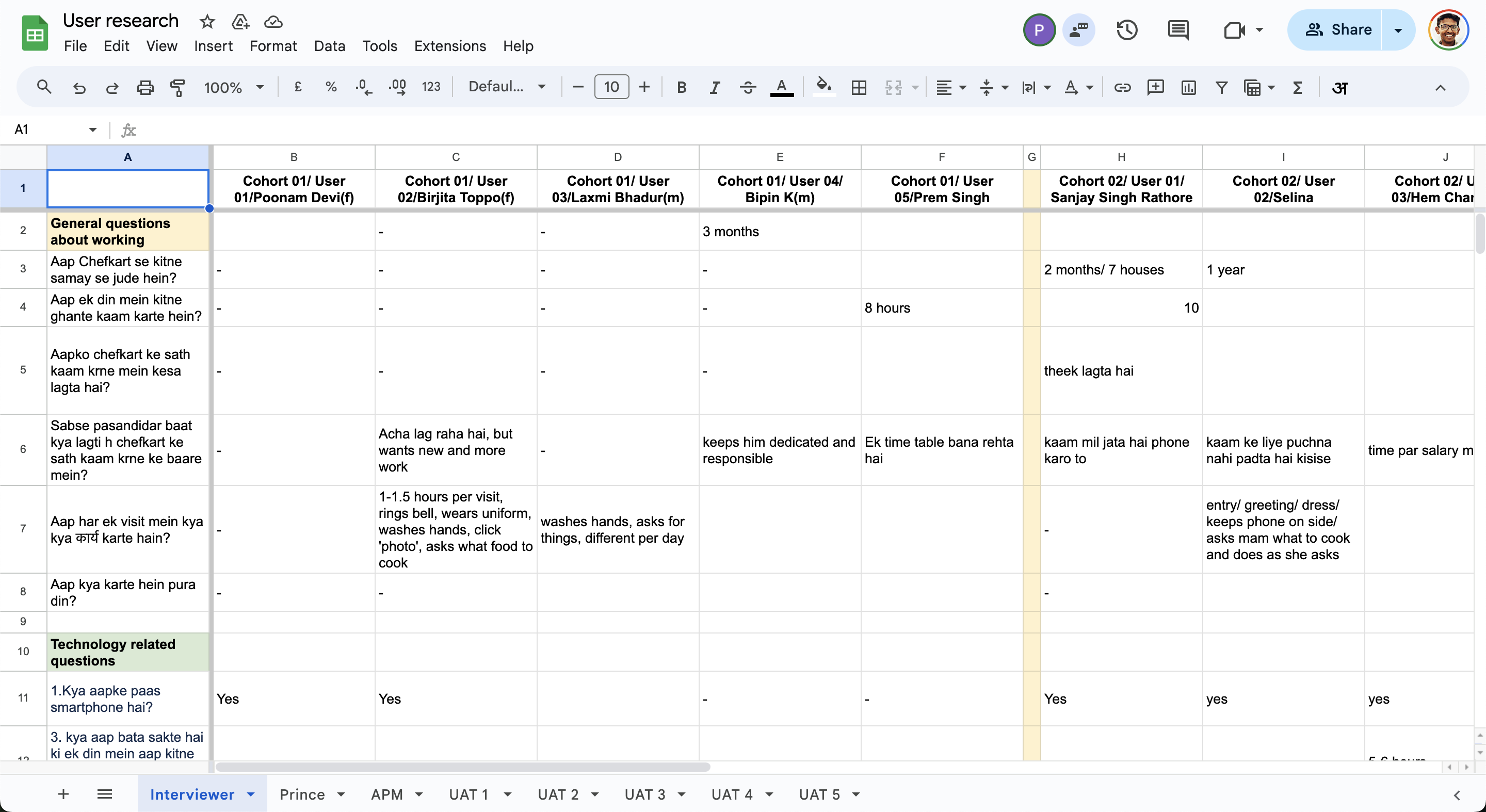
I didn't research from a desk. I went to where the cooks actually were: homes, kitchens, shared accommodations. Four methods, run in parallel, over two weeks. Each one revealed something the others couldn't.
20%
Functionally illiterate
Text-first UI was a complete blocker. Icon-first wasn't a style choice. It was survival for 1 in 5 users.
20%
Bengali only speakers
English-first excluded 1 in 5 users before they even reached the home screen.
100%
Used WhatsApp daily
The only trusted mental model we had. So we borrowed every familiar pattern we could from it.
#1
Reason for uninstall
Battery drain. Performance on entry-level Android wasn't optional. It was the product.
The Question That Drove Everything
How might we redesign the Partner App so a cook who has never used a smartphone app can onboard and take their first booking, without any help? ✦
How might we redesign the Partner App so a cook who has never used a smartphone app can onboard and take their first booking, without any help? ✦
How might we redesign the Partner App so a cook who has never used a smartphone app can onboard and take their first booking, without any help? ✦
How might we redesign the Partner App so a cook who has never used a smartphone app can onboard and take their first booking, without any help? ✦
The Question That Drove Everything
How might we redesign the Partner App so a cook who has never used a smartphone app can onboard and take their first booking, without any help? ✦
User Testing
Each round broke something new.
5 rounds · 45 users · 1 week
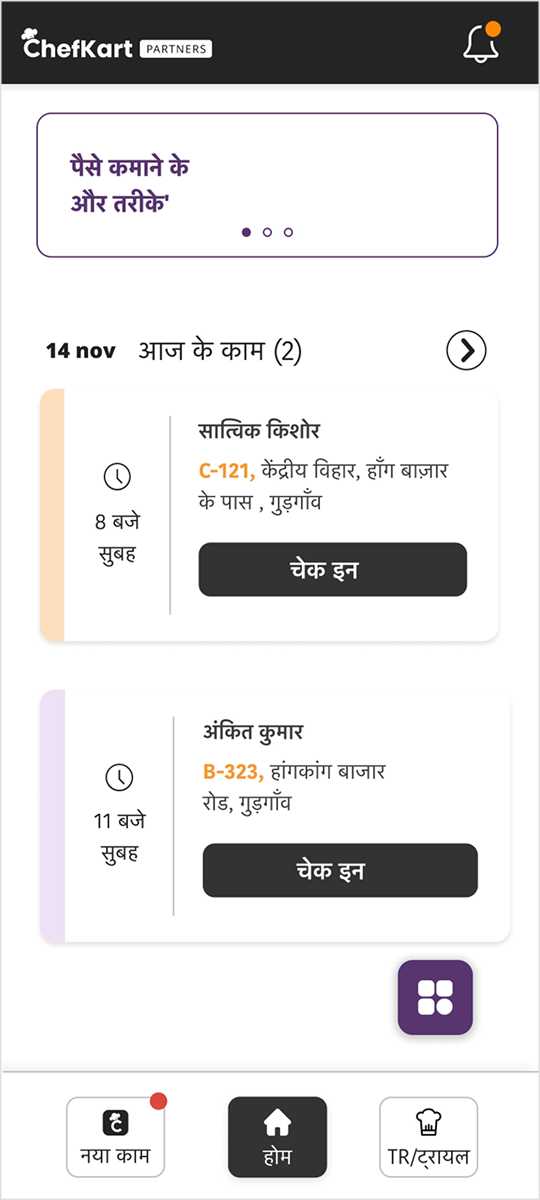
1 / 4
Round 01
Navigation was completely broken
Cooks couldn't find their bookings at all. The navigation pattern borrowed from generic consumer apps, but these users had never used one. We had to start from their mental model, not ours.
Fix → Moved bookings to home screen surface level
1 / 4
From 30% to 90% adoption. In one redesign. For users the original app forgot existed.
30%
0%
App Adoption
35%
0%
Daily Check-ins
0%
CAC Reduction
↓
Performance Issues

Screen 01
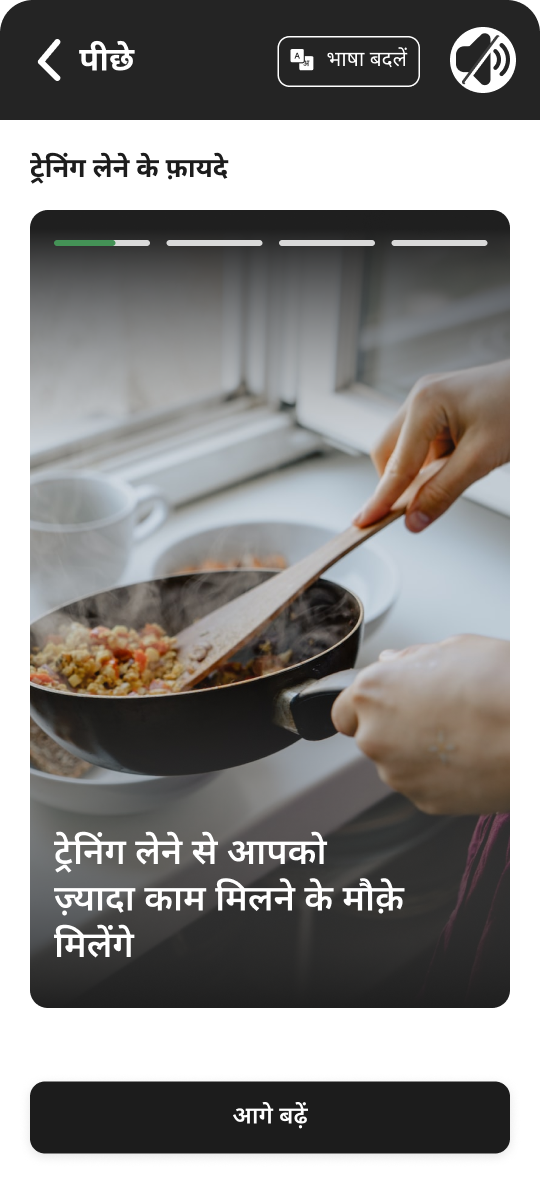
Screen 02
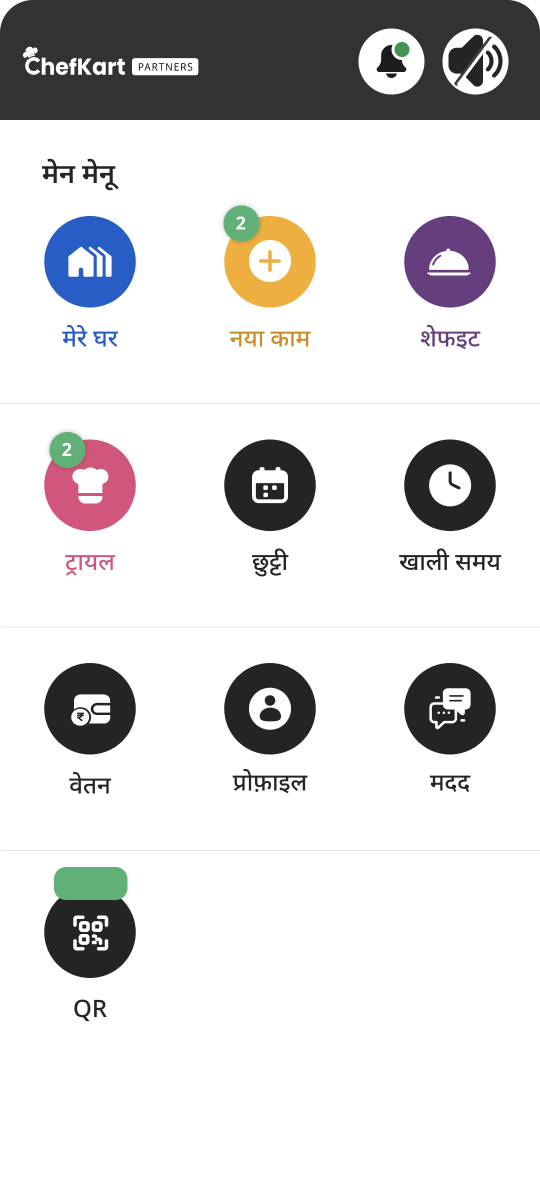
Screen 03
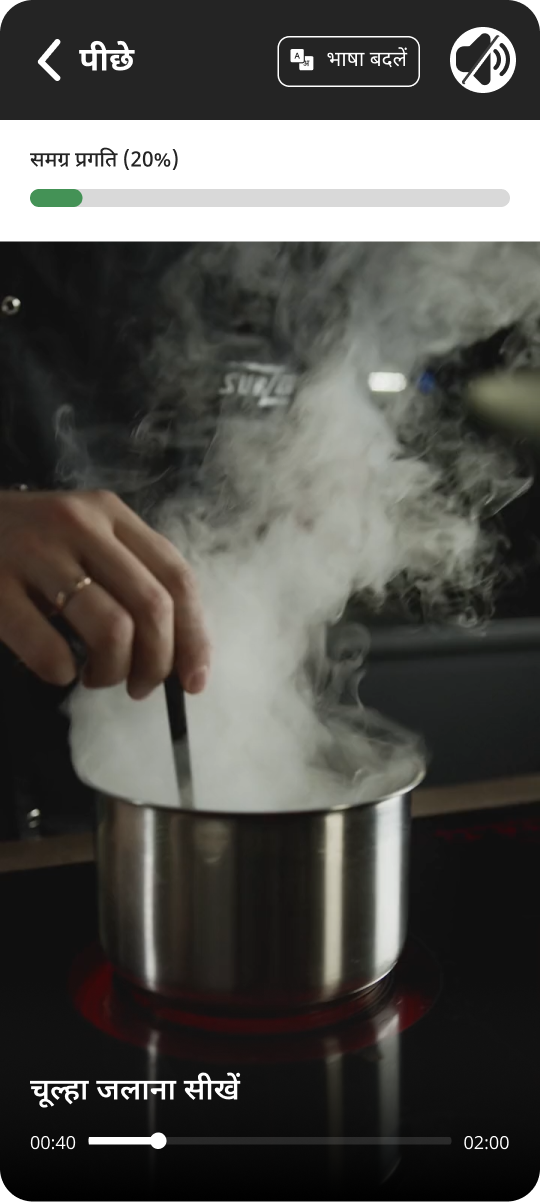
Screen 04
Screen 01
Screen 02
Screen 03
Screen 04
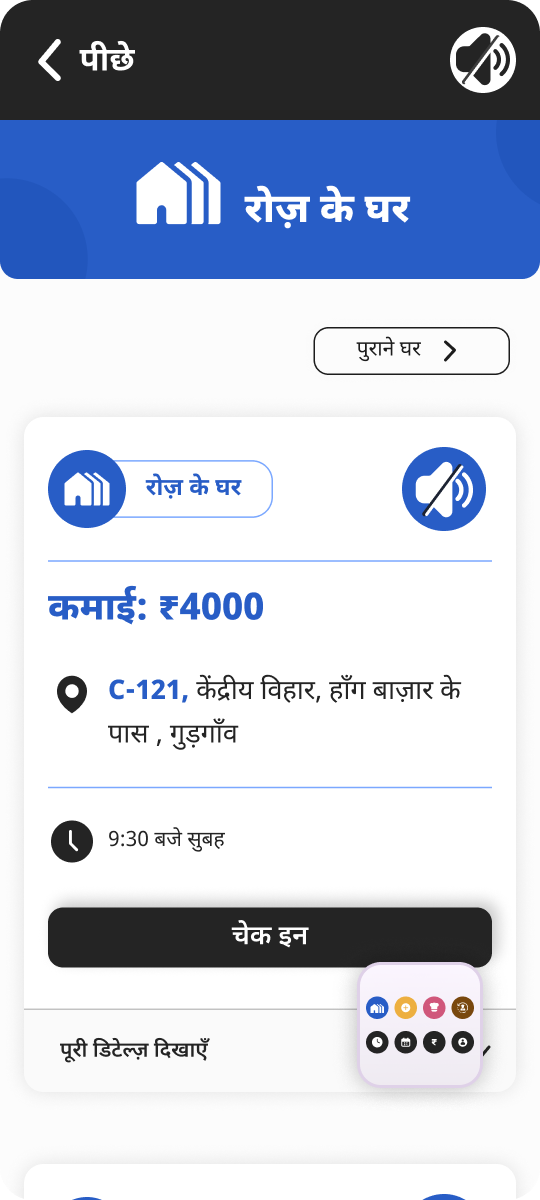
Screen 05
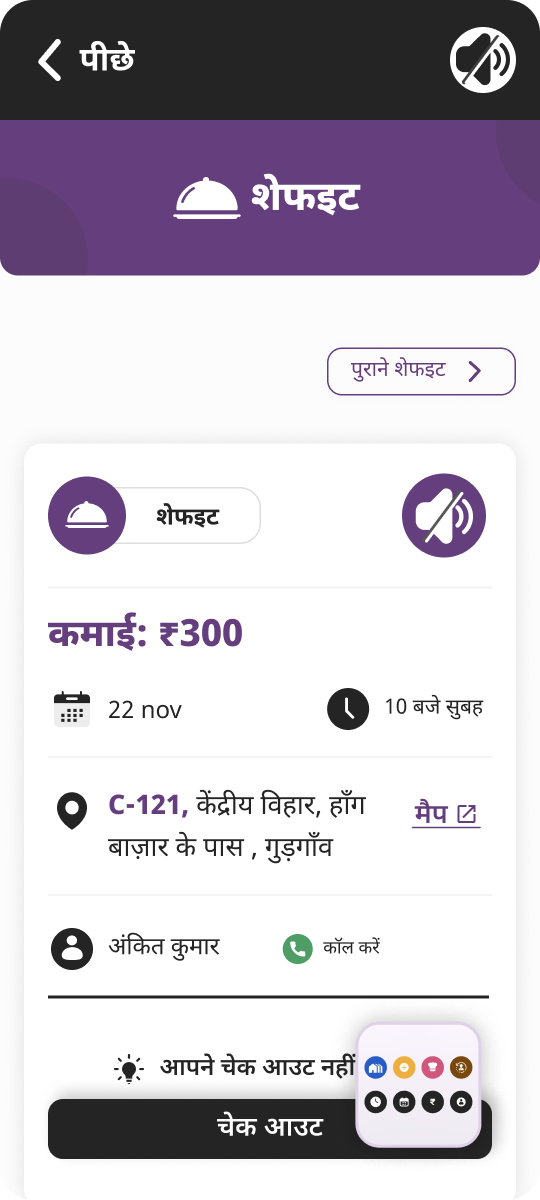
Screen 06
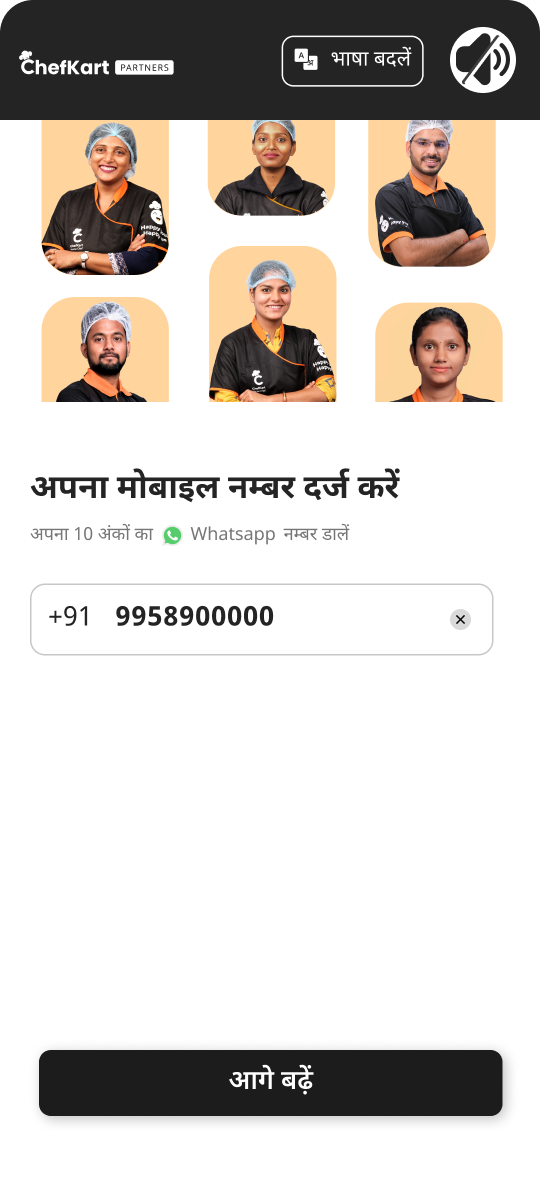
Screen 07
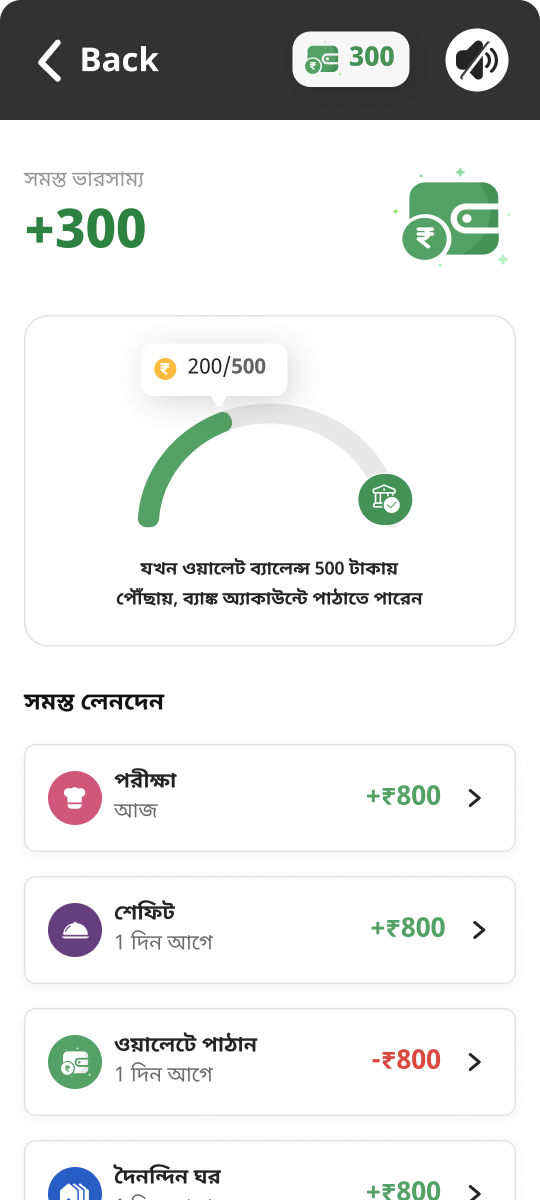
Screen 08
Screen 05
Screen 06
Screen 07
Screen 08
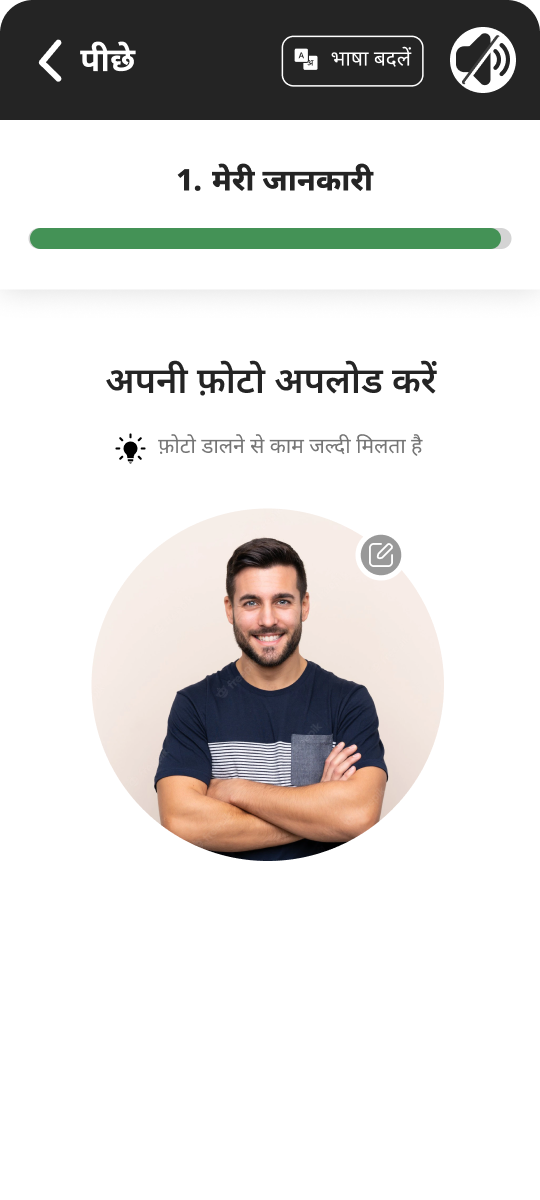
Screen 09
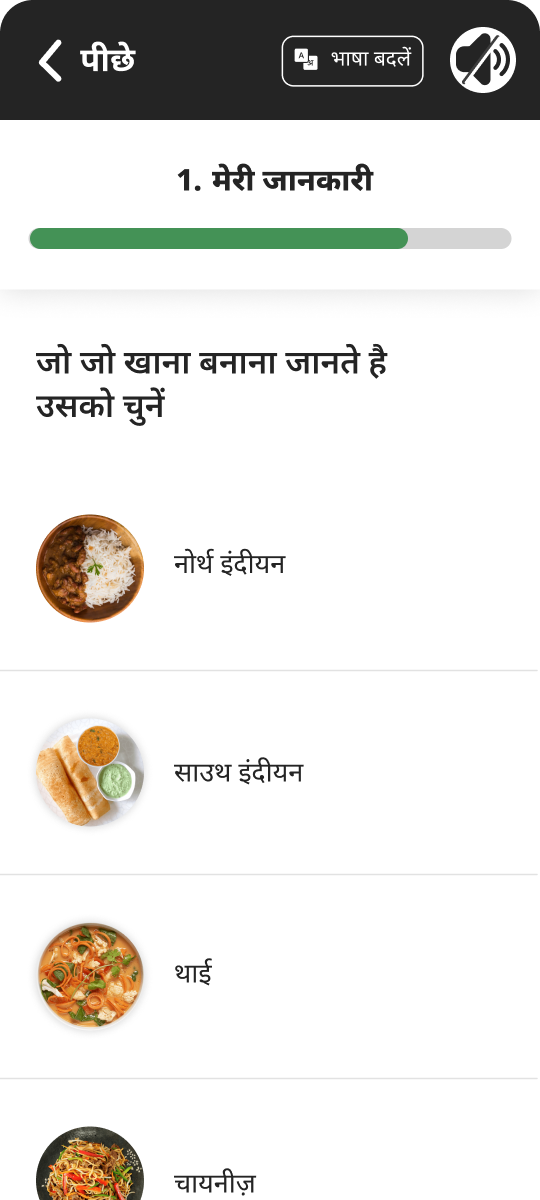
Screen 10
Screen 01
Screen 02
Screen 09
Screen 10
Screen 01
Screen 02
What I Learned
Four things this project taught me.
01
Literacy as a design constraint
Designing for illiterate users meant rethinking every label, icon and flow from scratch. Simplicity isn't a style. It's a survival decision for 1 in 5 of your users.
02
Research leadership is a design skill
Leading 5 rounds of user testing taught me that good research has to be fast enough to actually influence decisions, or it's just documentation.
03
Constraints are creative fuel
Designing for low-end Android, poor network, battery anxiety: every constraint forced a better, leaner solution than I would have found on a blank canvas.
04
Systems thinking over screen thinking
Working within existing UI components while introducing new ones taught me to design the system, not just the screens.
This portfolio was
Designed, built & shipped entirely with Claude.